Versatility of Expanded Metal Mesh, Metal Mesh Sheets, Decorative Perforated Sheet in Punjab
If you’ve ever walked across a metal ramp with a mesh-like pattern under your feet, chances are you’ve encountered expanded metal. It’s that tough, grippy, open-sheet design you’ll see everywhere from industrial walkways to architectural panels—and yet, it’s one of the most overlooked materials in modern fabrication.
But let’s get this straight: expanded metal isn’t just “metal with holes in it.” It’s engineered strength.
What Exactly Is Expanded Metal?
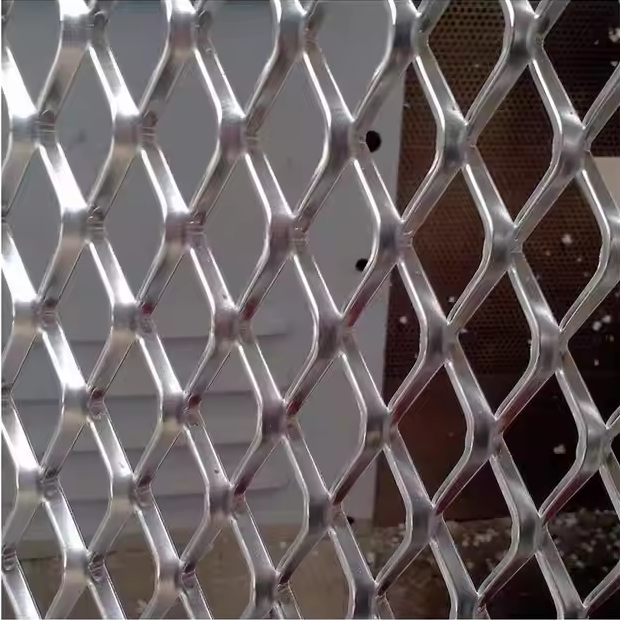
Expanded metal starts as a solid sheet—no magic, just clever engineering. Through a process of slitting and stretching, it transforms into a lattice of diamond-shaped openings. No welding, no joints, no added material—just one single piece, made stronger and lighter in the process.
You’re not cutting out pieces like you would in perforated metal. Instead, you’re reshaping what’s already there. That means less waste, more structural integrity, and a distinctive aesthetic that’s as functional as it is eye-catching.
Expanded Metals are made from a continuous sheet of metal that is stretched and slit to form uniform diamond pattern meshes. Precious and specialty metals can all be expanded as well as some plastics and other ductile materials. The process is simple but incredibly effective.
Why It Works So Well?
Let’s skip the sales talk and get into what really matters when you’re choosing materials.
Strength without Bulk
Expanded metal holds up under pressure. Literally. Because it’s formed from one continuous sheet, there’s no weak points from welds or joins.Slip Resistance You Can Trust
On factory floors or outdoor stairs, that raised, gritty texture gives real traction—even in rain, oil, or snow.Ventilation and Visibility
Need air to flow? Light to pass through? Want security without full coverage? Expanded metal balances openness with protection like a pro.Budget-Friendly & Eco-Smart
Since there’s minimal scrap in production, you’re getting more value for less material. It’s lean, efficient manufacturing.Easy to Cut, Shape, and Fit
Whether you’re building machine guards or custom facades, it plays nice with welders, cutters, and bending tools.
Common Applications


Expanded metal shows up in more places than most people realize. Some are obvious. Others are surprisingly creative.
Industrial Safety Walkways & Catwalks – Durable and slip-resistant, even in rough environments.
Machine Enclosures & Guards – Keeps operators safe while allowing visibility and airflow.
Architectural Screens & Cladding – Designers love it for modern facades with texture and shadow play.
Fencing & Security Barriers – Sturdy, climb-resistant, and tough to tamper with.
Shelving, Grills & Storage – Strong enough for weight, open enough for circulation.
Expanded metal used in many fields such as buildings, partitions, household equipment, electric instruments, firing trays, automobiles, side road protection, bird cages, acoustic equipment, vessels, flower stands, vessels, machine covers.
Styles, Sizes, and Metals – You’ve Got Options
Expanded metal isn’t a one-size-fits-all product. It comes in:
Standard (Raised) – Classic rough texture, excellent grip.
Flattened – Smooth and sleeker, better for aesthetics or where foot traffic isn’t a concern.
Mini & Micro Mesh – Perfect for filters, vents, or anything precision-sized.
Heavy-Duty Mesh – Built like a tank for high-load scenarios.
As for materials? Steel, aluminum, stainless, copper—you name it. Each comes with its own perks in terms of strength, weight, corrosion resistance, or style.
Expanded metal has that rare balance of form and function. It’s got an industrial toughness with an architectural edge. It’s the unsung hero in factories, construction sites, and design studios alike.
And maybe that’s what makes it so compelling. It doesn’t need to scream for attention. It just shows up, performs, and quietly does the job better than most people realize.
Key Product Specification
Standard Material – Carbon Steel
Dimensions (Thick Steel Plate)
Grating – 3.2 mm – 9.0 mm
standard 1.2mm-9.0mm
Flat 1.0mm-4.0mm
Standard Tolerance – 5mm per 1 meter of length
Flattened expanded metal – 7mm per 1 meter of length